

I recently attended a panel discussion titled “Reimagining the IRA: Lessons Learned & What Needs to Change for IRA 2.0”, hosted by Forward Together Wisconsin. While the discussion was focused on what might work better in the future, it also spurred me to reflect on the 2022 Inflation Reduction Act (IRA) more broadly.
The Dane County Office of Energy & Climate Change really leaned into the IRA when it became law. The bill was signed in August 2022 and in January 2023 we posted new website pages aimed at helping folks navigate the new opportunities. Additionally, I did a lot of talks—to anyone who would listen—about the various IRA opportunities. Again and again I told folks that the IRA was a game changer, that they needed to learn more and take advantage. The recent session prompted me to reflect on how this all looks four years later.
How the IRA Changed Things
In the IRA Congress invented a way for local governments and nonprofits—entities that did not pay federal taxes—to claim clean energy tax credits for their own projects. Whether you call that mechanism Direct Pay or Elective Pay, it was an amazing innovation because it made solar, geothermal heat pumps, electric vehicles and other clean energy solutions more affordable for hundreds of tax-exempt entities. Locally tax exempt entities have claimed millions of dollars through Elective Pay, accelerating clean energy investments exactly as Congress intended. There’s no double that Elective Pay worked. And Elective Pay credits are still available, albeit for fewer technologies. Plus, the core innovation—a way for tax-exempt entities to claim clean energy tax credits without complex third-party arrangements—endures, waiting for a new Congress to create new tax credits. Elective Pay is a permanent policy win.
More, though, the projects installed are a win too. Before the IRA there was one all-electric net-zero energy facility in Dane County with solar, geothermal heat pumps and batteries. Today there are at least eight mostly net-zero solar/geothermal facilities in the area with more coming online all the time. The IRA spurred a bunch of clean energy projects, public and private, and those projects will continue to save money and cut emissions year after year.
Plus there are all the residential projects that have happened, both via the now-expired residential tax credits and via the Home Energy Rebates which continue to be available. (Side note: Wisconsin was the first state to implement both parts of the Home Energy Rebates program, because we could leverage our outstanding existing statewide Focus on Energy infrastructure. Hooray, Wisconsin!) Households across Dane County have electrified their homes and transport, installed solar panels and made their homes more energy efficient, more comfortable and more affordable. Those benefits will endure too.
Additionally, the IRA Congress created a myriad of both formula and competitive grant programs that enabled local governments to lead on local climate action. The IRA authors recognized that local governments can be local catalysts so the IRA empowered local governments to lead. In a lot of places this mattered, it got local leaders thinking about how they could accelerate communitywide action, innovating on solutions that work in specific locales. The shift from national to local is important because, at a local level, climate risks are not partisan; floods and wildfires impact folks whether they vote red or blue. In retrospect I think the shift to local leadership was especially impactful because it helped ensure that action—specifically local action—would endure through times (like now) when there is no federal leadership on climate.
More, those IRA grants spurred local governments (and other local entities) to build new partnerships that did not exist before the IRA. Many of the IRA grants required broad coalitions, spurring folks to engage with other groups. That engagement and the subsequent planning leads to new levels of understanding and even trust. Here at OECC we built relationships with a number of new partners thanks to the IRA. And now, even when there are no new IRA grants on the horizon, those relationships continue.
So, yes, we gained a lot from the IRA.
What Would We Do Differently?
In the fall of 2022, when the IRA was brand new, I remember listening to various podcasts and webinars, trying to make sense of the opportunities. My sense then was that this was a big deal, that Congress did their part and now we had to do ours to take full advantage of what they had created. At some level I’m pleased with what we have accomplished and yet…
I wish I had conveyed more urgency in every talk I delivered in 2023 and 2024. (Yeah, I know…some of you are thinking that if I had gotten much more excited during those talks I would have levitated.) In those years the national experts said that Congress never revoked tax credits so I believed we had a decade to get things done when, in reality, we had just a few years for some of the opportunities. In retrospect I wish I had pushed people harder to get projects underway, that I would have leveraged the fear-of-missing-out much more strongly in every conversation.
In 2026 I better appreciate that big opportunities can be fleeting so it is vital to take full advantage while you can. Lesson learned.
Still, there is a lot we would do the same way. We would again lean into helping people make sense of the opportunities, we would celebrate the projects completed and we would look for opportunities to partner with new people to get more done faster.
Looking back I am grateful for the IRA and all the benefits that accrued across our communities. And I am ready to lean into whatever opportunities are next. Onward, Dane County!
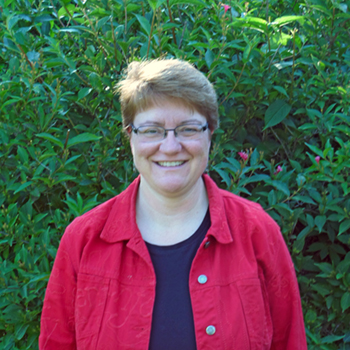
Kathy is the Director of the Dane County’s Office of Energy and Climate Change. In that role she's leading efforts to implement the Climate Action Plan. Prior to coming to Dane County, Kathy led Cool Choices and, prior to that, she led Wisconsin's Focus on Energy program.
The Dane County Office of Energy & Climate Change maintains this blog as a way to offer:
To be sure that you don't miss new blog entries, subscribe to our email updates.