
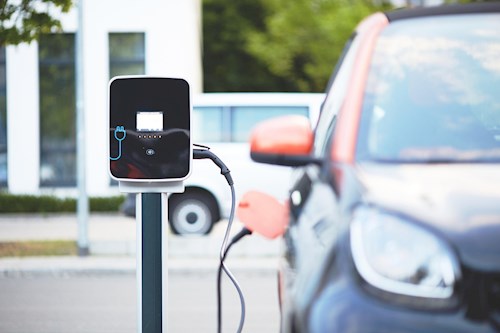
In 2024 and 2025 more than one in five new cars sold worldwide was electric. In Norway, 90% of all new vehicle sales are electric whereas the percentage that is electric is closer to half in China. While electric vehicle (EV) sales in the US currently lag other parts of the world, the trend—globally, across the US and definitely here in Dane County—is toward electric vehicles.
The shift to EVs has roots in environmental benefits and cost savings but it is also because EVs deliver a better driver experience.
In January General Motors Chief Executive Officer Mary Barra told analysts that the trend toward EVs is clear, noting “We know once somebody drives an EV, they rarely go back to an internal combustion engine.”
I drive an EV myself so I can vouch for that statement. EVs have superior torque, feeling much more responsive than a gas car. And, without the noisy engine, driving an EV is smooth and quiet. Plus, the EV is clean—there’s no stinky emissions or oil spots in my garage. And then there is the convenience: I charge my EV overnight at home in our garage, just like I charge my smart phone overnight at home. I don’t miss standing in the snow and rain to fuel up at gas stations any more than I miss using payphones. When asked, I tell people that I would never go back to a gas car and that I strongly recommend that everyone consider purchasing an EV, especially if your household has more than one vehicle. (I often also add that when households have both gas and electric vehicles, folks find that nobody wants to drive the gas car.)
I am surprised when I meet people who still believe outdated myths about EVs, especially here in Dane County. After all, Dane County is just 10% of the state’s population but almost 25% of all the EVs in Wisconsin are registered here.
There are three big myths about EVs:
You can’t get where you want to go in an EV
EVs are more expensive than gas cars
EVs are worse for the environment than gas cars
All three myths are false, reflecting outdated information or half-truths. So let’s separate fact from fiction.
You CAN Get There in an EV
The number of public EV charging ports in the US has nearly doubled since 2021. There are now more than 237,000 ports at more than 78,000 locations across the US. And more stations are coming online all the time.
That said, more than 80% of all EV charging happens at home, in the EV owner’s garage. At our house we charge on a regular 120 plug but lots of EV owners have installed home chargers, which are faster than a standard outlet. (An EV home charger requires a 240 plug, like a clothes dryer or refrigerator.) And whether you’re using a 120 or 240 plug, the thing about home charging is that it’s convenient—you come home, plug in and the car’s ready the next day.
The typical Wisconsin driver travels less than 40 miles per day. Most EV models average a range of about 300 miles. That means you can easily charge overnight at home and be set for your typical driving.
Managing the charge on an EV is a lot like managing the charge on your smart phone—you need to charge more if you have higher usage. In the case of the EV, driving fast on the highway will sap your battery more than city driving, in the same way that video calls sap your phone battery compared to sending text messages. And cold weather reduces the range of EVs as well as gas vehicles.
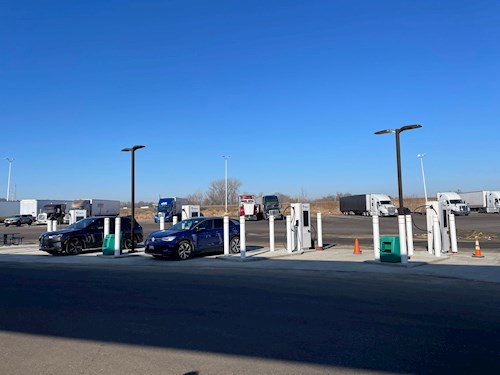
There are, of course, times when you need to charge away from home. The good news is that this is getting easier all the time. Here in Wisconsin, we’re getting fast chargers along key highway corridors, for example, and there are also chargers at a lot of hotels and tourist destinations. Plus, here in Dane County we’re in the midst of a program, Charge Up Dane County, to provide affordable EV charging to households without personal garages.
And if you do need to use public charging there are a variety of apps that will help you locate nearby charging options. My personal favorite is PlugShare.com where I can read reviews from other EV drivers.
On Full Cost of Ownership, EVs Compete with Gas Cars
When you are comparing costs, it is important to compare the full cost of ownership, not just the purchase price. A bargain that is expensive to maintain is not a bargain.
And EVs are substantially cheaper to maintain than gas vehicles. Electricity is cheaper per mile than gas and EVs do not require oil changes and other maintenance that gas cars require. All of that means an EV can cost less to own and operate than a gas car, especially if you have access to home charging or affordable public charging.
As is the case with any new technology, the first EVs were expensive. Today, though, there are lots of EV options out there, including a robust used EV market. That means there is an EV for every budget.
Tools like the US Department of Energy’s Alternative Fuels Datacenter Calculator can help you calculate the total cost of ownership of various vehicle options.
EVs Are Better Environmentally than Gas Cars
First, let’s acknowledge that the alternatives to driving—mass transit, biking, carpooling—are all better for the environment than driving alone. That said, the next best option is an EV.
EVs are better environmentally because they use fuel more efficiently, using 80% of the energy from the battery to propel the vehicle whereas a gas car uses just 25% of the gasoline for propulsion. You will hear talk about the environmental impact of mining rare earth minerals for batteries and definitely there’s opportunity for better mining practices but, the minerals in batteries (in EV batteries as well as smartphone batteries and various other electronics) are all re-usable, we mine those minerals once and then re-use many times whereas when we drill for oil, we burn it just once and then need to drill for more oil. That means the mining impacts from fossil fuels are, over time, much more significant.
Often people will point out that many EVs run on grid electricity which is produced at least in part from fossil fuels, so it is not 100% clean. That is true but it is also true that electricity is the only power source that gets cleaner over time as we add more wind and solar to the grid. By comparison, burning a gallon of gas today emits the same emissions as burning a gallon of gas 50 years ago or 50 years from now. Driving an EV fueled by Wisconsin’s current electric grid emits emissions equivalent to a gas car that gets over 50 mpg so, even today, the EV powered by the grid emits less emissions than almost all of the gas vehicles on the road.
Give an EV a Spin
Whether you are motivated by cost savings, environmental impacts or the fun of driving, I encourage you to check out the benefits of an EV. Take a test drive at a dealership, chat with EV owners at a local EV event or ask your neighbor to give you a ride in her EV. See for yourself what modern driving has to offer.

Kathy is the Director of the Dane County’s Office of Energy and Climate Change. In that role she's leading efforts to implement the Climate Action Plan. Prior to coming to Dane County, Kathy led Cool Choices and, prior to that, she led Wisconsin's Focus on Energy program.
The Dane County Office of Energy & Climate Change maintains this blog as a way to offer:
To be sure that you don't miss new blog entries, subscribe to our email updates.