
From primates that reside in tropical areas to polar bears that prefer the arctic, Henry Vilas Zoo works hard to keep animals at temperatures that mimic their native habitats. New sustainability efforts–including a new Solar Pavilion and the goal to become fossil fuel free–mean that clean energy will play a larger role in powering our beloved critters’ quality of life.
When local philanthropist and entrepreneur, Cal Couillard, approached Zoo staff about donating a solar pavilion, staff jumped at the chance. The Zoo was already exploring ways to integrate renewable energy into the design of its new giraffe barn, but a solar pavilion provided an even quicker clean energy opportunity. Each year, close to 700,000 people visit Henry Vilas Zoo. With this Pavilion, comes an opportunity to showcase a visible reminder about the role clean energy can play in Dane County and inspire others to work towards a sustainable future.
The solar pavilion is a canopy with 65 solar panels that will also serve as a new event space for birthday parties, media events, educational programs and more. Overlooking the flamingo patio, this year-round pavilion can hold close to 75 people, produce around 48,000 kwh of electricity per year, and save the zoo more than $8,000 in energy bills!
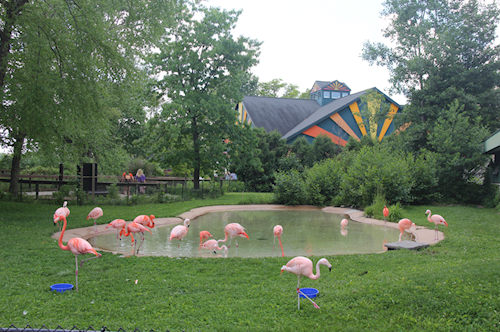
Cal’s idea, though, was bigger than just more solar. When he approached the Zoo and other Dane County officials, he proposed that the donated pavilion would be the first step toward a fossil fuel free zoo by 2040. Dane County Executive Melissa Agard embraced this idea and OECC staff started thinking about how our Office could help. And in November 2026 the County Executive joined Cal Couillard, his daughter Elise, and other staff to announce that the Henry Vilas Zoo was on a quest to become the first fossil fuel free zoo in Wisconsin by 2040. This marks an exciting achievement for one of Dane County’s most visited facilities.
Being fossil fuel free means that all Zoo power would come from renewable energy sources. All of Dane County’s electricity is already 100% renewable so becoming fossil fuel free would mean transitioning away from methane gas in buildings and from gas-fueled vehicles.
To expedite the process, Zoo staff and the OECC have partnered with a group of UW Mechanical Engineering students to create a roadmap. Nicknamed the “Amped Animals,” the students are analyzing energy use and electrification options for the buildings with the highest carbon emissions, and creating a road map of electrification options for specific facilities at the Zoo. Their first priority for upgrades is the polar bear enclosure.
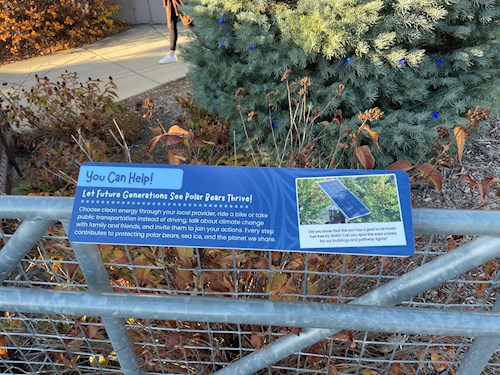
This enclosure is especially important because the zoo recently welcomed new polar bears, Nora and Siku, to join their current resident, Berit, as part of a breeding effort to restore polar bear populations. The Henry Vilas Zoo is lucky to be one of only 36 zoos across the US that house polar bears, and one of fewer than a dozen with a breeding program. With this responsibility, zoo staff want to make sure the polar bear enclosure is at the perfect (freezing) temperature for polar bears. That has meant that the UW students are investigating ways to electrify the bear enclosure while allowing the bear dens to be as cold as outside temperatures while the areas for zookeepers are more temperate. (The engineers also need to make sure the pipes don’t freeze). It is a unique buildings challenge, one that might ultimately create a model that helps other zoos keep their polar bears comfortable too.
The updates to the bear enclosure are also an important example of leadership. As a zoo that houses this vulnerable species, the zoo will be increasing awareness of polar bears’ habitat loss. And of course that habitat loss is a result of climate change. So the simultaneous Zoo transition away from fossil fuels reinforces our commitment to polar bear survival.
The new solar pavilion will build on Dane County’s long-standing commitment to reducing emissions and increasing renewable energy across the County. It is also an exciting opportunity to showcase renewable energy to hundreds of thousands of people every year.
We are excited at the progress we are making within our own County operations to increase renewable energy across our facilities and see the new pavilion as a way to outwardly demonstrate the role renewable energy can have in Dane County.